
What Is Laminated Veneer Lumber (LVL) and How Is It Manufactured?
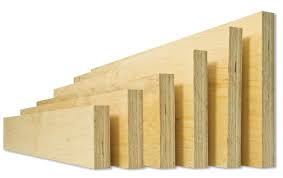
Laminated veneer lumber is an engineered wood product created through a precise manufacturing process that transforms thin wood veneers into high-performance structural beams. Unlike traditional sawn timber, LVL combines multiple layers of wood to achieve superior strength and consistency.
The Manufacturing Process of LVL
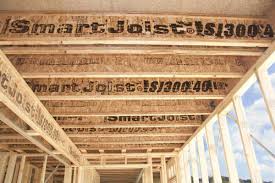
The laminated veneer lumber manufacturing process begins with rotary-peeled veneers, typically 3mm thick, sourced from fast-growing plantation timber. These veneers undergo careful grading and drying to achieve optimal moisture content. Manufacturers then apply structural adhesives to each layer before stacking them with the grain running parallel in the same direction, a method commonly used in LVL Formwork systems to achieve high strength, consistency, and dimensional stability.
Engineered wood production reaches its critical phase when these bonded veneers enter industrial presses. Under controlled conditions of high heat (approximately 150-200°C) and pressure, the adhesives cure and create permanent bonds between layers. This process typically takes several hours, transforming individual veneers into solid, dense beams.
The Benefits of LVL Composition
The resulting LVL composition delivers exceptional structural integrity that surpasses conventional timber. Each beam exhibits:
- Uniform strength throughout its entire length, eliminating weak points common in natural timber
- Predictable load-bearing capacity thanks to consistent density and grain orientation
- Enhanced dimensional stability that resists warping, twisting, and splitting
- Higher strength-to-weight ratio compared to solid sawn timber of equivalent dimensions
This manufacturing precision makes LVL ideal for critical load-bearing applications where reliability cannot be compromised.
Why Should Buyers Consider LVL Over Traditional Timber?
1. Strength-to-Weight Advantage
LVL delivers a superior strength-to-weight ratio compared to traditional timber, allowing builders to use lighter beams that carry heavier loads. This engineered advantage means fewer support posts and longer clear spans in construction projects, creating more flexible floor plans and open spaces without compromising structural integrity.
2. Eliminating Weak Points
Traditional timber’s natural inconsistencies—knots, grain variations, and growth defects—create weak points that limit load capacity. LVL eliminates these variables through its manufacturing process, producing uniform strength throughout every piece.
3. Stability in Moisture Changes
Dimensional stability sets LVL apart in practical applications. Standard timber responds to moisture changes by warping, twisting, or splitting, especially in headers and long-span beams. LVL maintains its shape and alignment regardless of environmental conditions, reducing callbacks and structural adjustments during construction.
4. Predictable Performance under Load
The timber strength comparison becomes particularly evident in load-bearing applications:
- LVL beams resist bowing under sustained loads
- No seasonal movement requiring door or window frame adjustments
- Predictable performance across all pieces from the same grade
- Reduced risk of splitting when nailing near edges
5. Consistent Quality for Reliable Designs
Consistent quality means every F17-graded LVL beam performs identically to specifications, unlike traditional timber where each piece varies in strength. This reliability allows engineers to design with confidence, knowing the installed product matches calculated load requirements exactly. Builders can order precise quantities without selecting through lumber piles for straight, defect-free pieces.
What Are the Key Benefits of Using LVL in Construction?
LVL benefits extend beyond structural performance to include natural resistance against common timber threats and environmental advantages. The manufacturing process creates a product that inherently resists moisture penetration and termite damage, two primary concerns in construction projects.
1. Moisture Resistance
Moisture resistance in LVL stems from the bonding process, where adhesives seal the wood fibers and reduce water absorption. This characteristic makes LVL suitable for applications where humidity fluctuates or occasional moisture exposure occurs. The material maintains its dimensional stability even in challenging conditions.
2. Termite Resistance
Termite resistance provides additional protection, particularly in regions prone to insect infestations. Many LVL products receive specialized treatments during manufacturing that deter termites and other wood-boring insects. These treatments penetrate throughout the material, offering comprehensive protection against decay and environmental damage.
3. Sustainability in Timber Production
Sustainability in timber production represents a significant advantage of LVL. Manufacturers use fast-growing plantation timber species, reducing pressure on old-growth forests. The veneer process maximizes yield from each log, converting up to 75% of raw material into usable product compared to 40-50% for traditional sawmilling.
4. Cost-Effectiveness
Cost-effectiveness emerges through multiple channels:
- Reduced material waste during fabrication and installation
- Faster installation times due to consistent dimensions and lighter weight
- Lower long-term maintenance requirements
- Decreased need for additional support structures due to superior strength
How Buyers Determine the Right Size and Grade of LVL for Their Project
Span tables are the main tool used to find the right LVL dimensions, showing the maximum safe distances a beam or joist can cover based on specific project details. These tables remove any uncertainty by providing tested data that pairs beam sizes with their load-bearing capacity over different spans.
The selection process involves considering several important factors:
- Load conditions: Dead loads (permanent structural weight) and live loads (temporary forces like furniture, people, or snow)
- Support configuration: Single spans between two supports versus continuous spans across multiple supports
- Joist spacing: Distance between parallel beams, typically 400mm, 450mm, or 600mm centers
- Environmental exposure: Indoor versus outdoor applications affecting treatment requirements
Building code compliance is essential for proper LVL sizing, ensuring structures meet minimum safety standards while avoiding unnecessary material costs. Undersized beams create dangerous structural weaknesses and code violations, while oversized members waste money without improving performance.
An LVL sizing guide makes this process easier by comparing project specifications with suitable grades. F17 LVL has higher strength characteristics than F16, supporting longer spans or heavier loads with the same dimensions. Accurate evaluation of these factors ensures the chosen LVL perfectly fits project needs, providing both safety and cost efficiency throughout the structure’s lifespan.
What Are the Different Grades and Sizes Available for LVL?
LVL grades F16 F17 represent the structural strength classifications that indicate how much load the material can safely support. F17 LVL offers higher bending strength and stiffness compared to F16, making it suitable for heavier load-bearing applications like main support beams and long-span joists. F16 provides adequate strength for lighter structural requirements such as lintels, short-span beams, and secondary framing members.
The grade designation directly correlates to the material’s modulus of elasticity and bending strength, with F17 typically handling greater stress loads across longer spans without deflection. Builders select between these grades based on engineering calculations that account for dead loads, live loads, and safety factors required by local building codes.
LVL sizes options range from standard dimensions to custom specifications:
- Thickness: 35mm, 45mm, 63mm, and 90mm
- Width: 150mm, 200mm, 240mm, 300mm, 360mm, 400mm, and 450mm
- Length: Available up to 12 meters or longer depending on manufacturer capabilities
Thicker and wider sections accommodate heavier loads and longer spans, while smaller dimensions work for lighter applications. The modular sizing allows builders to match exact project specifications without excessive material waste. Suppliers often stock common combinations like 45mm x 300mm or 63mm x 400mm for typical residential and commercial applications, with custom sizes available for specialized structural requirements.
How Can Buyers Match Their Project Requirements With the Right Type of LVL?
Selecting LVL for construction projects begins with identifying the specific structural demands of your application. Residential floor joists require different specifications than commercial roof beams or load-bearing headers above wide door openings. Calculate the total load—including dead loads (permanent structural weight) and live loads (occupants, furniture, snow)—to determine the minimum strength grade needed.
Project-specific LVL selection
Project-specific LVL selection depends heavily on where the timber will be installed:
- Indoor applications like internal beams and floor joists typically need standard-grade LVL without additional treatments
- Exposed or semi-exposed areas such as carports, verandahs, or eaves require moisture-resistant treatments
- High-humidity environments including bathrooms, laundries, or coastal properties benefit from enhanced moisture protection
- Ground-level or subfloor installations demand both moisture and termite-resistant treatments
The span length between support points directly influences your LVL choice. Longer spans necessitate deeper beam depths or higher strength grades to prevent excessive deflection. Single-span beams (supported at two points) require more robust specifications than continuous-span configurations (supported at three or more points) covering the same distance.
Environmental factors at your construction site play a critical role. Properties in termite-prone regions require pre-treated LVL, while projects in bushfire zones may need specific compliance ratings. Coastal locations with salt exposure demand additional protective treatments to maintain structural integrity over time.
What Are the Cost Implications When Choosing LVL Compared to Standard Timber?
LVL typically costs 20-40% more upfront than standard timber, but this initial investment often translates into significant long-term savings through superior durability and material efficiency. The engineered nature of LVL eliminates the need to purchase oversized beams as a safety buffer against natural timber defects, meaning you pay only for the exact structural capacity required.
Material Efficiency
Material efficiency extends beyond the beam itself. LVL’s dimensional stability prevents the costly callbacks and repairs associated with warped or twisted timber. Projects avoid the expense of replacing failed structural members or addressing secondary damage from moisture-related issues. The consistent strength characteristics mean fewer support posts and shorter bearing lengths, reducing overall material requirements.
Labor Cost Advantages
Labor cost advantages make a substantial difference in the cost comparison LVL vs timber:
- Faster cutting and drilling due to uniform density
- Lighter weight per strength unit reduces crew size requirements
- No need to inspect and reject defective pieces on-site
- Simplified installation procedures reduce specialized labor hours
- Fewer adjustments during framing due to dimensional accuracy
Installation time reductions of 15-25% are common when switching from standard timber to LVL for structural applications. These labor savings compound across large projects, often offsetting the higher material cost within the project timeline itself. The LVL Timber Buy Guide: Choosing the Right LVL for Your Project Requirements emphasizes calculating total project cost rather than focusing solely on material price per linear meter.
How Can Buyers Make Informed Decisions When Purchasing LVL Timber?
Successful LVL selection requires balancing multiple technical and practical considerations. This buying guide for LVL timber centers on three critical decision points that determine project success.
1. Start with structural requirements
Consult span tables to match beam dimensions with your specific load conditions, support configuration, and spacing needs. Select appropriate grades (F16/F17) based on calculated stress requirements rather than assumptions.
2. Evaluate environmental factors
Projects in moisture-prone areas or regions with termite activity need treated LVL products. Consider the exposure conditions your structure will face throughout its lifespan.
3. Balance cost against performance
While LVL carries higher upfront costs, factor in reduced waste, faster installation, and extended durability when comparing total project expenses.
4. Verify compliance
Ensure your selected LVL meets local building codes and safety standards. Work with suppliers who provide technical documentation and engineering support for your specific application.
This LVL Timber Buy Guide: Choosing the Right LVL for Your Project Requirements approach ensures optimal material selection that delivers both structural integrity and long-term value.
Learn more about: Which Scaffolding Mesh Performs Best in Windy Conditions? A Comparison for Contractors