
What Are the Risks of Over-Pruning Palm Trees?
Over-pruning palms forces the tree to drain its stored nutrients to compensate for the sudden loss of Removing too many fronds at once leaves a palm vulnerable and weak. This is one of the most common mistakes highlighted in Palm Tree Pruning guides, yet it causes significant long-term damage.
When you remove too many fronds at once, the palm can no longer produce enough energy through photosynthesis. The tree must then pull from its internal nutrient reserves—essentially its emergency food supply—to survive. This nutrient depletion leaves the palm fragile and unable to defend itself against pests, diseases, or environmental stress.
The 25% rule exists for a reason. Arborists and palm care experts recommend never removing more than one-quarter of a palm’s fronds during a single Palm Tree Pruning session. This threshold allows the tree to maintain adequate photosynthetic capacity while recovering from the trimming.
The consequences of ignoring this guideline include:
- Stunted growth as the palm struggles to generate new fronds
- Increased susceptibility to palm tree damage from wind, cold, or drought
- Weakened trunk structure that becomes prone to breakage
- Extended recovery periods that can last months or even years
Healthy fronds are the palm’s solar panels. Stripping away too many at once is like unplugging a device while it’s still running—the system crashes, and recovery becomes an uphill battle.
When Is the Best Time to Prune Palm Trees?
Late spring and early summer are the best times to prune palm trees. During this period, palms are actively growing and have plenty of energy stored up. Pruning during these months allows the trees to heal quickly and produce new growth to replace any fronds that were removed.
Why Winter Pruning Can Be Harmful
Pruning palm trees in winter can be detrimental to their health. Here’s why:
- Slow Healing: During winter, palms’ metabolic processes slow down significantly. This means they won’t be able to heal as quickly from pruning cuts.
- Cold Temperatures: Cold weather can make it difficult for palms to seal their wounds properly. This leaves them vulnerable to diseases and pests.
- Double Stress: When you combine winter stress with pruning trauma, it creates an extra burden on the palm tree. This can weaken its entire structure.
For more insights on how to manage tree maintenance during winter, you might find this Phoenix fall tree maintenance guide helpful.
The Dangers of Pruning During Drought
Pruning palm trees during drought conditions is also risky. Here’s what happens:
- Water-Stressed Palms: When palms don’t have enough water, they already struggle to keep their existing fronds and root systems healthy.
- Removing Healthy Fronds: If you remove healthy green fronds during dry periods, the tree won’t be able to photosynthesize effectively. This means it won’t have enough energy to recover from the pruning.
- Depleted Nutrient Reserves: The palm will have to rely on its depleted nutrient reserves while trying to heal the pruning wounds at the same time.
How Timing Affects Palm Recovery
The timing of your pruning directly impacts how quickly the palm recovers and how healthy it stays in the long run:
- Spring and Summer Pruning: When you prune during these seasons, the wounds will start healing within weeks.
- Off-Season Cuts: If you prune at other times, like winter or drought periods, the cuts may remain open for months.
This extended healing time increases the risk of infection and takes away energy from normal growth patterns. As a result, the palm’s development could be stunted for an entire growing season.
For those interested in exploring more about optimal pruning times and techniques specific to different types of trees including palms, this article provides valuable insights.
How Does Cutting Fronds Too Close to the Trunk Harm Palms?
Cutting fronds flush against the trunk removes critical nutrient-gathering tissue that palms need to transport resources throughout the tree. This tissue, located at the base of each frond where it connects to the trunk, acts as a vital pathway for water and nutrients moving between the canopy and root system.
Improper cutting techniques that slice too close create entry points for diseases and pests while damaging the tree’s natural defense mechanisms. Each frond base contains protective buds that generate new growth and maintain the palm’s structural integrity. When these buds suffer injury from overzealous trimming, the tree loses its ability to seal wounds effectively, leaving exposed areas vulnerable to fungal infections and bacterial invasions.
The consequences extend beyond immediate trunk damage palm trees experience at the cut site. Injured tissue disrupts the palm’s vascular system, reducing its capacity to distribute essential nutrients and water. This weakening effect compounds over time with repeated close cuts, gradually deteriorating the tree’s overall health and stability.
Safe frond removal requires leaving a 2-3 inch stub when cutting dead or dying fronds. This buffer zone protects the trunk’s living tissue and allows the remaining stub to dry naturally before falling away. The stub acts as a protective barrier while the tree seals the wound internally, preventing pathogens from penetrating deeper into the trunk’s core tissues. For more detailed guidelines on tree and palm maintenance, it’s advisable to consult expert resources.
Why Is Removing Brown or Older Fronds Prematurely a Mistake?
Brown fronds continue to transfer valuable nutrients back to the palm tree before they naturally detach, making premature removal counterproductive to the tree’s health. These aging fronds act as nutrient reservoirs, allowing the palm to reclaim nitrogen, potassium, and other essential minerals through a process called translocation.
The brown fronds role extends beyond simple nutrient recycling. They provide structural support to the canopy, helping distribute weight and maintain the tree’s natural balance. When homeowners practice premature frond removal, they force the palm to compensate by drawing from its stored energy reserves in the trunk, weakening its ability to withstand environmental stresses like drought or disease.
The timing matters significantly for palm tree nutrition. Remove older fronds only when they:
- Hang completely vertical below the horizontal plane (at 90 degrees or more)
- Turn fully brown with no remaining green tissue
- Pose a safety hazard by threatening to fall on people or property
- Show signs of disease that could spread to healthy fronds
Fronds that are partially brown or yellowing still contribute to the tree’s metabolic processes. Cutting them prematurely disrupts the natural lifecycle and creates unnecessary stress. The palm must then redirect energy from growth and defense mechanisms to compensate for the lost nutrient sources, leaving it vulnerable to pests and environmental challenges.
What Are the Dangers of DIY Palm Tree Pruning Without Proper Knowledge or Equipment?
DIY palm pruning risks include serious injury and permanent damage to your trees. Untrained homeowners frequently make cuts at incorrect angles, remove healthy fronds, or use inappropriate tools that crush rather than cleanly slice through palm tissue.
Common homeowner errors include:
- Climbing ladders without proper stabilization or safety harnesses
- Using chainsaws or hedge trimmers instead of specialized palm pruning saws
- Attempting to prune palms over 10 feet tall without professional equipment
- Failing to sanitize tools between cuts, spreading disease from tree to tree
Other Resources : Plant pests and diseases
Falls from heights represent the most severe safety hazard. Palm fronds are slippery when dry and treacherous when wet, making ladder work exceptionally dangerous. Improper cuts with dull blades create jagged wounds that invite pests and pathogens into the tree’s vascular system. Furthermore, the lack of proper safety measures while pruning can lead to severe injuries.
Proper equipment for trimming palms includes curved pruning saws designed for palm fronds, pole pruners for lower fronds, and professional-grade climbing gear for taller specimens. These specialized tools create clean cuts that heal quickly and minimize stress on the tree.
Injury prevention becomes critical when dealing with palms exceeding 15 feet in height. Professional arborists possess both the technical knowledge to identify which fronds require removal and the safety equipment to work at elevation. Their expertise ensures your palm receives appropriate care while protecting you from preventable accidents. Check out more about 5 Questions You MUST Ask Before Booking Stump Grinding Services.
Why Should Homeowners Avoid Over-Trimming Before Storms?
Many homeowners believe aggressive pruning before hurricane season will reduce wind damage, but this storm preparation approach actually weakens palm trees. The misconception stems from thinking less foliage means less wind resistance, when the opposite proves true.
Fronds function as natural shock absorbers during high winds. Their flexible structure allows them to bend and sway, dissipating wind force rather than transferring it directly to the trunk. When homeowners remove healthy green fronds in preparation for storms, they eliminate this protective buffer system.
Over-trimming creates multiple vulnerabilities:
- Reduced structural support from fewer fronds means the trunk absorbs more direct wind force
- Depleted nutrient reserves leave the tree unable to repair storm damage quickly
- Exposed growth points become susceptible to wind-driven debris and salt spray
Research on wind resistance palm trees shows that properly maintained palms with full canopies survive storms better than heavily trimmed specimens. The key lies in removing only dead or dying fronds while preserving the tree’s natural defense system.
When Should Homeowners Consider Professional Palm Tree Trimming?
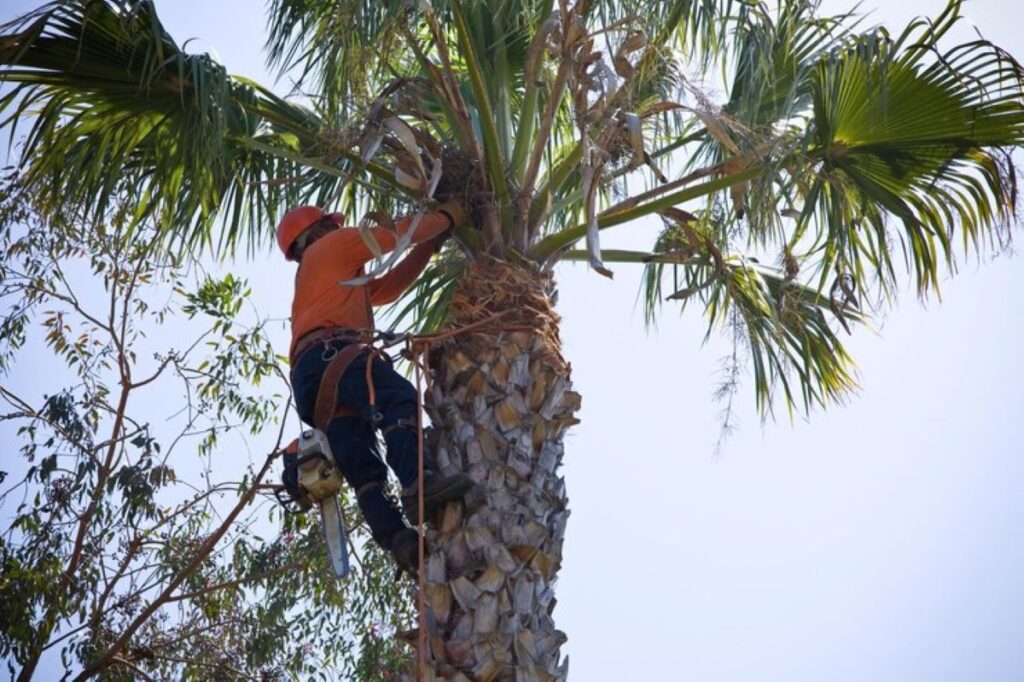
Professional palm trimming becomes essential when trees exceed 15 feet in height or show signs of complex health issues. Attempting to prune tall palms without proper equipment puts both you and the tree at serious risk.
Professional palm trimming benefits include:
- Proper technique application – Certified arborists understand exact cutting angles and frond removal limits that preserve tree health
- Safety equipment – Professionals use specialized climbing gear, bucket trucks, and safety harnesses that most homeowners lack
- Disease identification – Trained eyes spot early warning signs of pests, fungal infections, or nutrient deficiencies during routine maintenance
- Liability protection – Licensed services carry insurance covering potential property damage or injuries
Mature palm care requires specialized knowledge about species-specific pruning needs. A professional can distinguish between self-cleaning varieties that need minimal intervention and those requiring regular maintenance. Regular professional visits—typically once or twice yearly—prevent the accumulation of dead fronds, maintain aesthetic appeal, and catch potential problems before they become costly emergencies. This proactive approach keeps your landscape safe while avoiding the 7 Palm Tree Pruning Mistakes Homeowners Make (And How to Avoid Them).